What The Service Involves
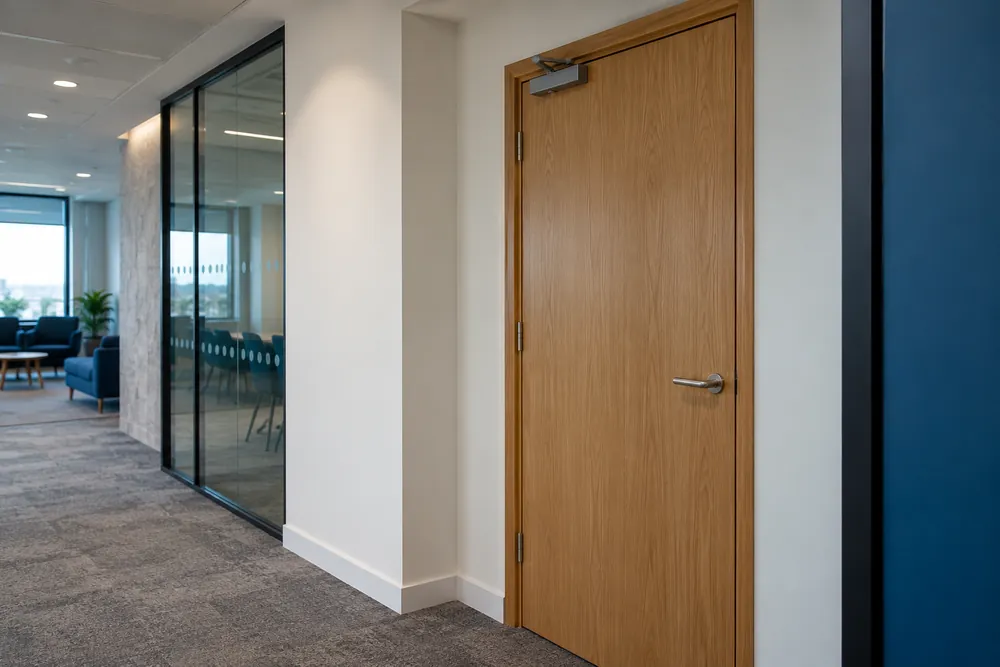
A fire door inspection examines the door assembly rather than the door leaf alone. The frame, glazing, hardware, seals, gaps and closing action all contribute to how the assembly performs. Damage or an unsuitable alteration can undermine a door that appears sound at first glance.
We help building managers define which doors need inspection and how the findings should be recorded. A numbered door schedule makes it easier to connect each defect to a location and arrange repairs. Where identification or certification evidence is unavailable, the uncertainty should be stated clearly.
What Needs Particular Attention
A visual inspection may consider damage, missing seals, apparent gaps, loose hardware and whether the door closes correctly against its frame. It should also look at obstructions and management practices, such as wedging a self-closing door open. Access-control arrangements need to be considered alongside the door function.
A visual check cannot prove the hidden core of a door or establish an unsupported fire-resistance rating. Labels, installation records and supporting documentation can help explain the intended specification. Any conclusion must reflect the evidence available and the limits of the inspection.
Commercial fire door maintenance duties arise within the wider Fire Safety Order framework. The fixed communal and entrance-door checking intervals often quoted from the Fire Safety (England) Regulations 2022 apply to specified residential buildings. They should not be presented as a universal inspection timetable for offices, factories or schools.
The Legal And Practical Framework
The Regulatory Reform (Fire Safety) Order 2005 provides the main workplace fire safety framework for Leicester. The responsible person must assess risks and maintain appropriate precautions. Employing someone to help does not remove the duty to manage findings and coordinate with others who control parts of the premises.
Agree a scope that reflects the premises and the question being investigated. A report should make its evidence and limitations understandable, including any areas not inspected. Keep the document with the building’s fire safety records and connect recommended work to a named person or role.
Guidance: Workplace fire safety responsibilities and the scope of the 2022 regulations.
How The Work Progresses
First, explain the property, the service needed and any known concerns. The scope should identify the areas included and the information required before attendance.
Next, arrange access and provide the records needed for the agreed inspection or review. The assessor should discuss relevant activities with someone familiar with the building and record limitations where evidence is unavailable.
Finally, use the findings to allocate actions, commission any necessary specialist work and retain completion evidence. If the report leaves a question open, establish who will obtain the missing information and how the conclusion will be updated.
Preparing For The Visit
Prepare the door register, floor plans and previous inspection or repair records. Confirm how doors will be identified, whether photographs are required and which restricted rooms need an escort. If access needs to be coordinated with school activities or secure business operations, explain that before booking.
Ask what the inspection includes and which parts cannot be examined without removing components. Doors with unusual arrangements, missing records or complex glazing may need a specialist investigation. The report should distinguish a maintenance issue from a question about the original specification.
What Affects The Cost
Door inspection costs reflect the number and type of assemblies, access arrangements and the detail of the required register. Double doors, glazed screens and secure areas can take different amounts of inspection time.
Agree whether labelling, photographs, a defect schedule and any reinspection are included. Remedial repairs, replacement doors and destructive investigations should have their own scope. Avoid choosing an inspection solely by a headline rate if the required evidence and door inventory have not been defined.
Common Questions
Is A Fire Door Inspection A Fire Risk Assessment?
A fire door inspection is a focused examination of door assemblies and does not replace a fire risk assessment of the premises. The wider assessment considers ignition hazards, occupants, escape, warning systems and management. Door findings should feed into that wider action plan, with clear responsibility for repairs and any follow-up inspection.
Can An Inspection Certify An Unlabelled Door?
An inspection cannot automatically certify an unlabelled door or assign a fire-resistance rating without supporting evidence. The inspector can record visible features, operation and defects, and explain where identification is uncertain. Further investigation or specialist advice may be needed before deciding whether repair, retention or replacement is appropriate for that location.
Related Support
For the wider assessment process, see our fire risk assessment Leicester guide.
Commercial Fire Risk Assessment →Office Fire Risk Assessment →Warehouse Fire Risk Assessment →Fire Safety Audit →Fire Risk Assessment Review →